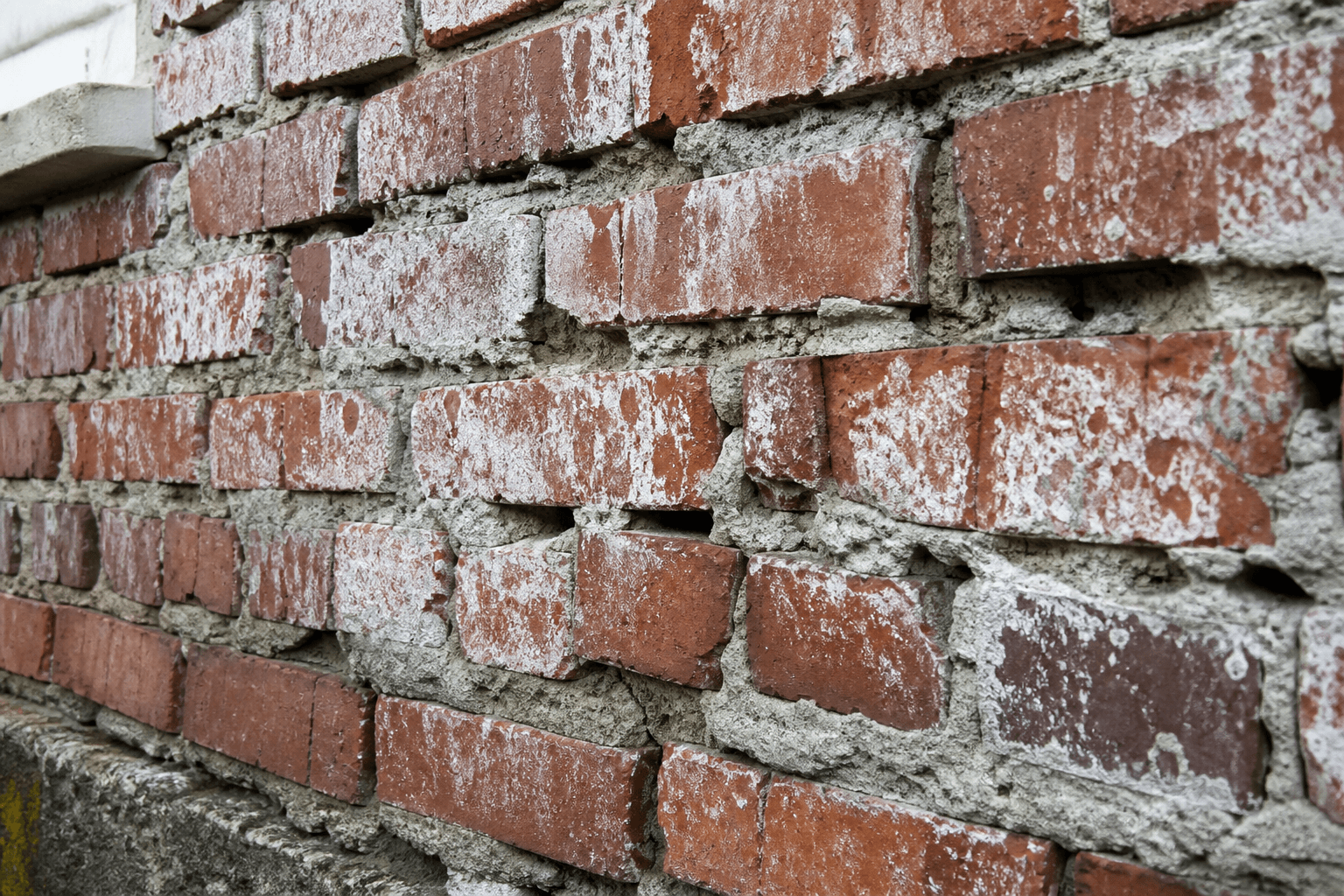
Mortar joints don't fail dramatically. There's no loud crack, no sudden collapse. They just slowly crumble, recede, and disappear — and most homeowners don't notice until the joints have been failing for years. By that point, what could have been a straightforward tuckpointing job has often turned into something more expensive.
Here's why failing mortar is a bigger deal than it looks, and how to catch it before it becomes a costly problem.
What mortar actually does
Mortar isn't structural glue. Brick walls don't depend on mortar for their strength the way you might think — the physical mass of the masonry carries the load. What mortar does is seal the wall. It fills the gaps between bricks and prevents water from getting into the wall assembly.
In this sense, mortar is a sacrificial material — it's designed to be slightly softer than the brick so that when stress occurs (thermal expansion, settling, freeze-thaw movement), the mortar cracks rather than the brick. That's the right failure mode. But it means mortar has a lifespan — typically 25–50 years depending on the original mix, the climate, and the exposure — and it needs to be replaced when it reaches the end of that lifespan.
What happens when mortar fails in BC's climate
In the Fraser Valley, we get significant rainfall from October through April. A brick wall with failed mortar joints is absorbing that water constantly during those months. During dry spells, the wall dries out. This wet-dry cycling isn't particularly damaging on its own.
The problem is freeze-thaw. When temperatures drop below zero — which happens reliably in Abbotsford and the surrounding area throughout winter — any water inside the brick or behind the joint freezes and expands. This expansion puts enormous pressure on the surrounding masonry. Over time, it causes:
- Spalling — the face of the brick pops off, exposing the softer interior
- Horizontal cracking through brick faces rather than through joints (a sign the wrong mortar type was used, or that water damage is advanced)
- Efflorescence — white salt deposits on the brick face caused by water moving through the wall and depositing minerals as it evaporates
- Interior water damage — water finding its way through failing joints into wall cavities and eventually showing up as staining, mould, or deteriorated insulation inside the building
The mortar type problem — and why it matters for older homes
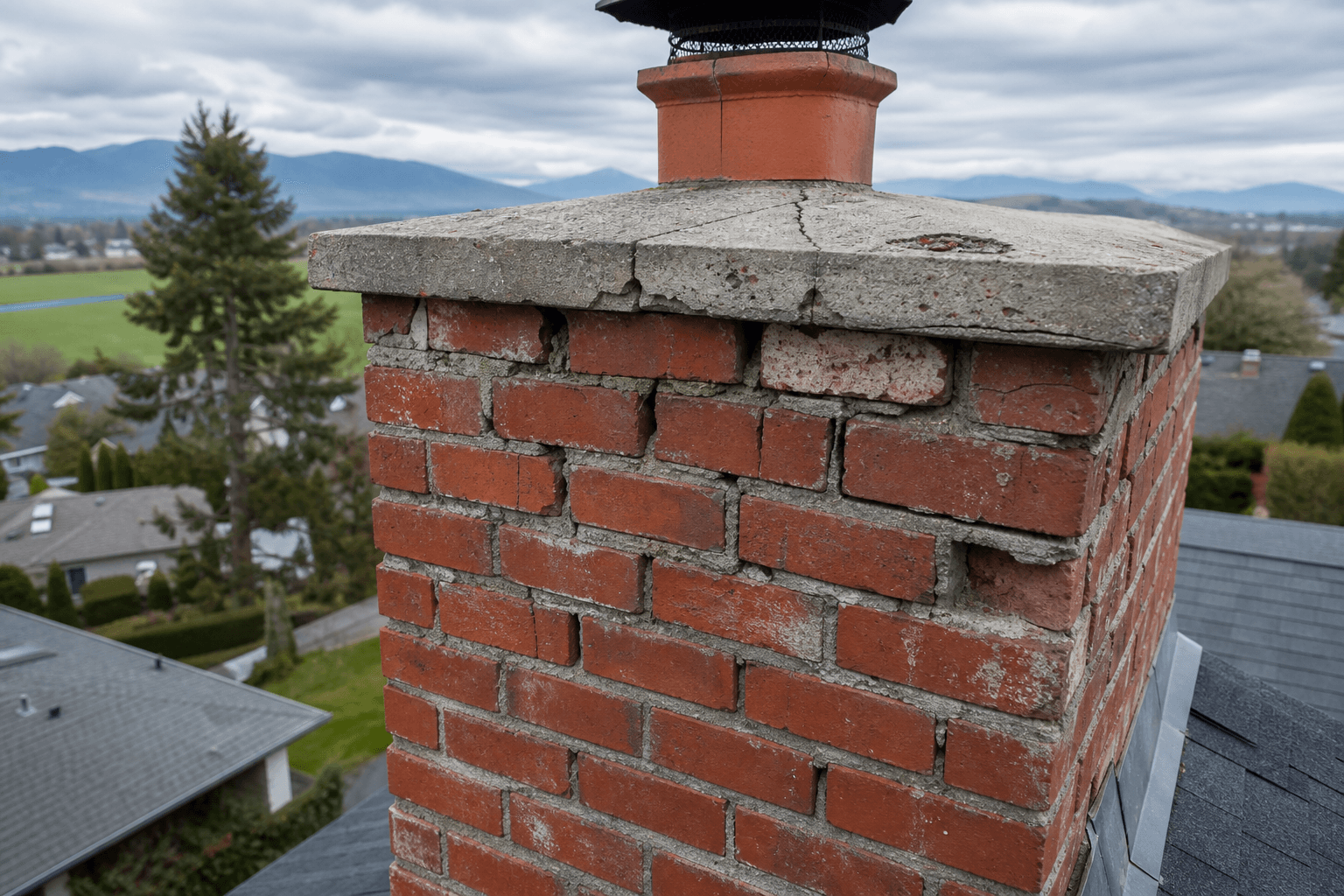
One of the most common mistakes in chimney and brick repair work is using the wrong mortar. Modern Portland cement mortars are significantly harder than the mortars used in most brick buildings constructed before the 1980s. When a hard mortar is used to repoint soft heritage brick, the mortar doesn't flex — the brick does. Instead of the joints cracking under movement, the brick itself cracks. That damage is much more expensive to fix than failed mortar.
We test the existing mortar before starting any tuckpointing project. If the wall has a soft lime-based mortar, we match it. Getting this wrong turns a repair into a bigger problem, and it's a mistake that's often made by contractors who don't specialize in masonry.
When to tuckpoint
The right time to tuckpoint is when mortar joints have receded more than 6mm from the brick face, or when you can press a key or screwdriver into the joint without much resistance. You don't need to wait until chunks are falling out.
Catching it early means the repair is straightforward — rake out the old mortar, pack in new mortar, tool the joint. Catch it late and you're replacing spalled bricks, dealing with water damage inside the wall, or both.
If your home has brick that hasn't been looked at in more than 10 years, or if you're seeing any of the signs mentioned above — efflorescence, spalling, visible gaps in the mortar — it's worth having someone look at it. Call us and we'll come out, assess what's there, and tell you straight what it needs.
Have a masonry project in mind?
We serve Abbotsford and the Fraser Valley. Give us a call or fill in the form for a free site visit and quote.
Ready to Talk Masonry?
Call us or send a quote request. Free site visit, clear written quote.
Licensed & Insured · BC Certified Masonry · Abbotsford, British Columbia